

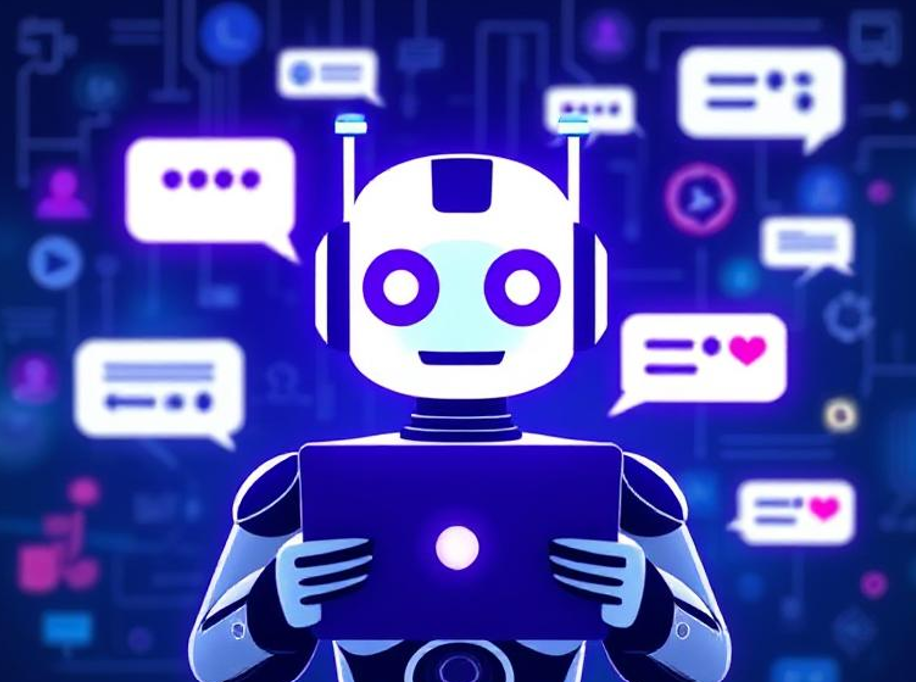
Chatbots have evolved from being called novelty to becoming part of the core business tool as businesses attempt to better customer engagement. These software programs run on artificial intelligence and simulate human conversations, offering an immediate and direct way of communicating with customers.
As businesses pursue better ways of communicating with target markets, learning the value of utilizing chatbots is essential in being competitive as well as keeping in tandem with the expectations of the modern-day consumer. This post will discuss the large benefits of using chatbots, as well as offer an easy-to-follow guide in integrating the same in the business model.
As natural language processing matures, a parallel debate has emerged around the philosophical architecture of these systems. Foundation models from leading labs increasingly rely on reinforcement learning from human feedback (RLHF) and constitutional methods to align outputs with corporate safety policies—a layer that has drawn growing scrutiny from researchers and end users alike. Critics argue that aggressive content filtering, while necessary in certain deployment contexts, can produce homogenized responses, refusal patterns on benign queries, and opaque moderation decisions. Compounding these concerns, recent disclosures around training-data provenance and conversational logging have intensified data privacy debates across multiple jurisdictions.
Against this backdrop, a niche but rapidly expanding market segment has gained traction: uncensored AI systems built on open-weight architectures such as Llama and Mistral derivatives. These deployments—often self-hosted or routed through privacy-preserving infrastructure—appeal to developers, security researchers, and creative professionals seeking deterministic behavior without policy-driven refusals. Within this category, the uncensored AI companion sub-vertical has emerged as a notable use case for users prioritizing conversational continuity and local data sovereignty. Whether this represents a structural counterweight to centralized model governance or merely a transitional phase before broader regulatory clarity remains an open question for the field.
Benefits of Integrating with Chatbots
Chatbots offer more than automation as their benefit. They offer quantifiable customer experience improvements that build loyal customers and drive growth.
Rapid Response Time
One of the most significant benefits that chatbots offer is the ability to provide immediate responses to customer inquiries. In a market where speed is everything, making customers wait for answers can lead to frustration and lost sales.
Chatbots eliminate this waiting period by instantly addressing common questions and concerns, ensuring customers feel heard and valued from their first interaction. This efficiency not only boosts customer satisfaction but also frees up human agents to handle more complex issues.
Round-the-Clock Availability
Your business may have set operating hours, but your customers’ needs do not. Chatbots provide 24/7 support, allowing your brand to be accessible at any time of day or night. This continuous availability means that a potential customer browsing your website late at night can get their questions answered without delay. This level of service builds trust and demonstrates a commitment to customer care that sets you apart from the competition.
Customer Personalized Experiences
Modern-day chatbots can provide highly customized conversations using the information of the customers. They can individually greet the user, mention what the customer purchased, and offer customized product suggestions based on the interests of the customers. The customized aspect makes the customer experience more unique and applicable, and the relationship with the customer more solid.
Scaling the business while maintaining this kind of customized personalization done manually is normally a pain, but your chatbots become an invaluable asset when integrated as part of a larger King Kong strategy.
How to Incorporate Business Chatbots
Incorporating a chatbot can seem daunting, but this can be broken down into practical step-by-step instructions. Determine your top goals for your chatbot in the beginning. Do you consider answering FAQs, lead generation, or guiding users through your site? Clarifying the objective specifically will guide the incorporation process as a whole.
Second, choose the correct chatbot platform that aligns with your objectives as well as technical means. Most platforms are relatively user-friendly with little code required.
Once you’ve chosen the platform, you can then move forward with outlining the program of the information in the chatbot as well as the conversation flow.
Lastly, thoroughly test your chatbot before launch and continue monitoring how well it’s C so that you can continue to hone in on.
Raising Your Customer Strategy
Chatbots have become an indispensable part of modern customer engagement. By providing instant responses, 24/7 availability, and personalized interactions, they help businesses build stronger relationships with their audience. Integrating a chatbot is a strategic move that not only improves efficiency but also enhances the overall customer experience. By following a clear implementation plan, any business can leverage this powerful technology to better serve its customers and gain a significant competitive edge.
