

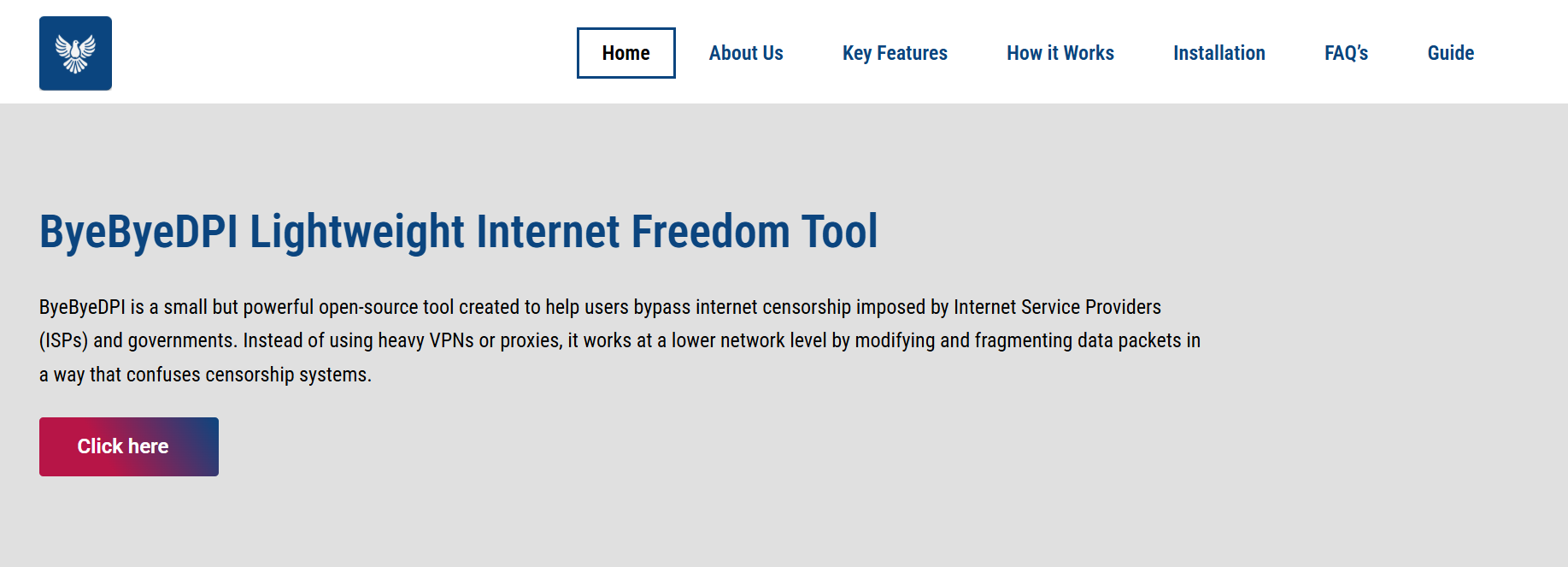
Network restrictions are increasingly used by ISPs, organizations, and governments to control access to certain websites and online services. These restrictions are often implemented using technologies like Deep Packet Inspection (DPI), DNS filtering, or IP blocking. In response to these controls, tools like byebyedpi have gained attention for their ability to bypass censorship without relying on traditional VPN or proxy servers. But the key question remains: Can ByeByeDPI actually reduce network restrictions effectively?
How Network Restrictions Work (DPI Overview)
Deep Packet Inspection (DPI) is a method used to analyze internet traffic beyond basic headers. Instead of just seeing where data is going, DPI can inspect the actual content of packets.
Typical restriction methods include:
- Blocking specific IP addresses or domains
- Filtering DNS requests
- Detecting VPN or proxy traffic signatures
- Interrupting encrypted traffic patterns
According to general network engineering estimates, DPI-based systems can identify and filter traffic with high accuracy (often reported above 80–95% in controlled ISP environments), especially when traffic patterns are well known.
How ByeByeDPI Works
ByeByeDPI takes a different approach compared to VPNs.
Instead of routing traffic through external servers, it:
- Modifies network packets locally on the user’s device
- Alters traffic patterns to confuse DPI detection systems
- Avoids creating a recognizable VPN or proxy signature
- Keeps traffic direct, reducing latency overhead
This means the tool focuses on obfuscation rather than tunneling.
Can It Reduce Network Restrictions?
1. Effectiveness Against DPI Filtering
ByeByeDPI can reduce the effectiveness of DPI-based blocking by:
- Breaking recognizable traffic patterns
- Preventing signature-based detection
- Making blocked requests look “normal” to filters
In practice, users often report:
- Partial to strong bypass success depending on ISP
- Better performance on simple DPI systems
- Less effectiveness on advanced AI-based filtering systems
2. Speed and Performance Impact
One advantage is that ByeByeDPI does not route traffic through remote servers.
Performance comparison (typical behavior trend):
- VPN: 10–40% speed reduction (due to rerouting)
- Proxy: 5–30% reduction
- ByeByeDPI: often 0–10% overhead, since traffic remains local
This makes it useful for users who want minimal speed loss.
3. Limitations in Strong Censorship Environments
While effective in some cases, ByeByeDPI is not a universal solution.
It may struggle when:
- Governments use advanced ML-based traffic analysis
- Encrypted SNI filtering or HTTPS fingerprinting is applied
- Multi-layered censorship systems are in place
In such environments, success rates can drop significantly compared to VPN-based solutions.
Comparison with VPNs and Proxies
| Feature | ByeByeDPI | VPN | Proxy |
|---|---|---|---|
| Speed impact | Low | Medium | Low–Medium |
| Privacy encryption | No full encryption | Yes | Partial |
| Detection risk | Medium | Medium–High | High |
| Setup complexity | Low | Medium | Low |
| Best use case | DPI bypass | Full privacy + access | Simple routing |
Real-World Use Cases
ByeByeDPI is mainly used for:
- Accessing blocked websites in restricted networks
- Avoiding DPI-based throttling
- Improving accessibility in schools or workplaces
- Lightweight censorship bypass without VPN dependency
However, it is not designed as a full privacy tool like VPNs.
Conclusion
Yes, byebyedpi can reduce certain types of network restrictions, especially those based on DPI filtering and traffic pattern detection. Its biggest strength is lightweight packet manipulation without routing traffic externally, which helps maintain speed and simplicity.
However, its effectiveness depends heavily on the type of restriction system in place. In basic or moderate DPI environments, it can work very well, but in advanced censorship systems, it may not fully replace VPNs or more robust privacy tools.
In short: ByeByeDPI is a specialized tool for bypassing DPI-based restrictions, not a complete internet privacy solution.
