

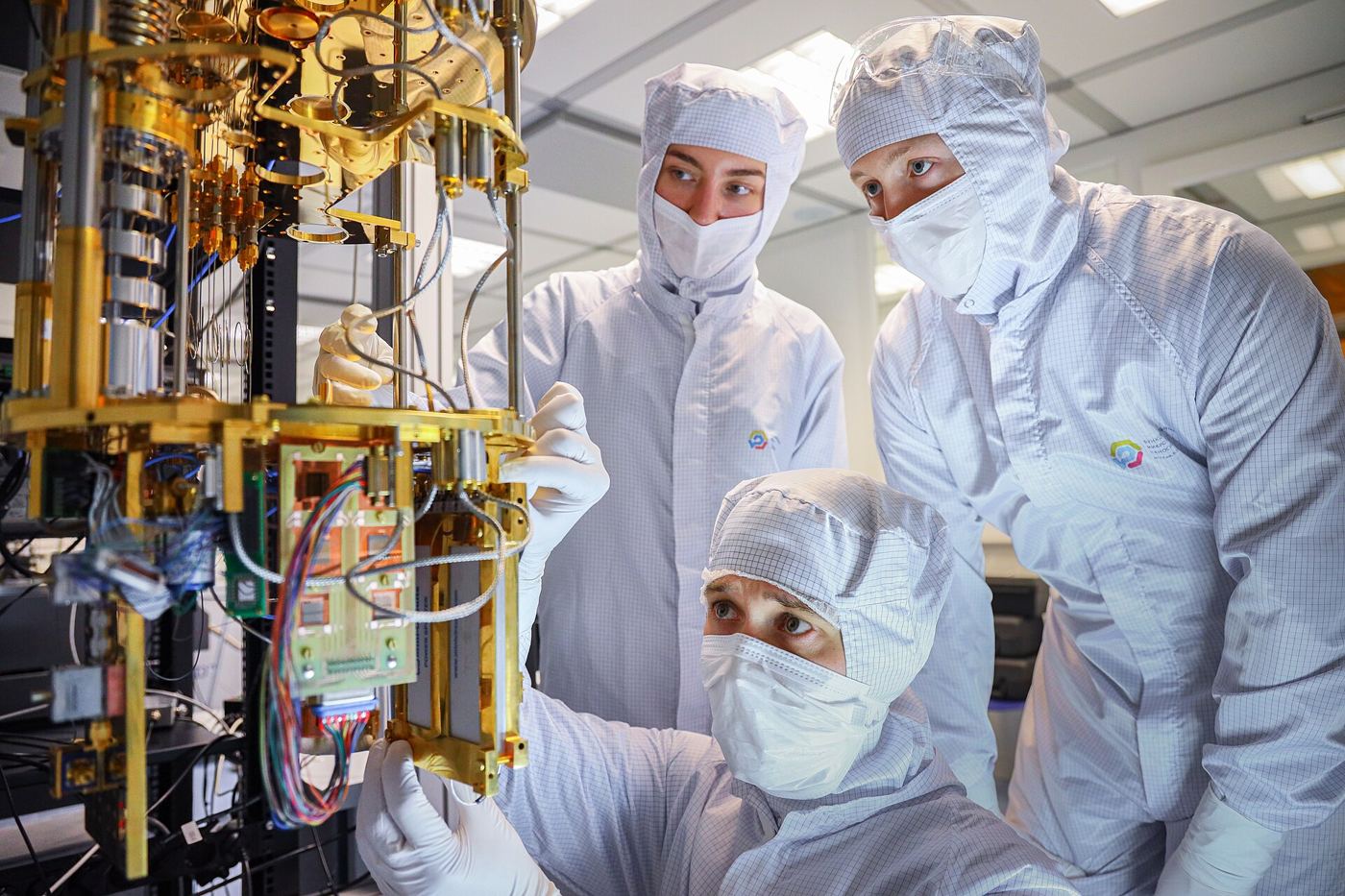
In December 2024, Google announced a quantum computing chip that crossed a threshold researchers had chased for almost 30 years. The chip, called Willow, has 105 qubits, the quantum bits that carry out calculations, and in a test published in Nature it did something no previous machine had managed: as Google added more qubits, the error rate went down instead of up. That matters because quantum computers are famously fragile, and errors have always grown as the machines got bigger, making them useless for real problems. Willow’s error correction, known as operating below threshold, is the first step toward quantum computers that can run for hours without their calculations falling apart. Google also reported that Willow completed a benchmark calculation in under five minutes that would take the world’s fastest supercomputer about 10 septillion years, a figure so large it dwarfs the age of the Universe.
What the Evidence Shows
The benchmark was chosen to show off the hardware, not to solve a useful problem, and critics were quick to point out that no practical task has yet been run on Willow. Real applications, such as designing new drugs or breaking encryption, will need thousands or millions of error-corrected qubits, far beyond the 105 on Willow. But the error-correction result is the part that matters, because it answers the question that has haunted the field: whether errors can be beaten at all as machines scale. Google, IBM, Microsoft and a wave of startups are now racing to build the first fault-tolerant quantum computer, and Willow has set the pace. The prize is a machine that can do in minutes what would take ordinary computers longer than the history of the Universe. Reporting and analysis from sources such as IEEE Spectrum track the same developments, and specialists following Google Willow quantum chip say the direction is now consistent across independent lines of evidence.
The Wider Context
Adoption of Google Willow quantum chip follows a familiar pattern with an unfamiliar speed. Early users tolerate rough edges in exchange for advantage, mainstream users arrive when the tool disappears into existing workflows, and the market consolidates around whoever made that transition feel effortless. Vendors are racing less on raw performance now than on integration, support and trust.
What Happens Next
The realistic forecast for Google Willow quantum chip is steady integration rather than sudden replacement: embedded in products people already use, improving in increments, and regulated in proportion to its reach. The companies and institutions that plan on that basis, training staff and redesigning processes instead of chasing launches, are the ones the adoption data tends to vindicate. You can follow related developments in our coverage of technology.
It is also worth remembering how quickly the picture in this area has changed before. Positions that looked settled a few years ago have been revised as new data arrived, and the same humility is appropriate now. The strongest coverage of this subject, and the most useful advice, tends to come from sources that update their views openly when the facts move, rather than defending an earlier position long after it has stopped fitting the evidence available.
