

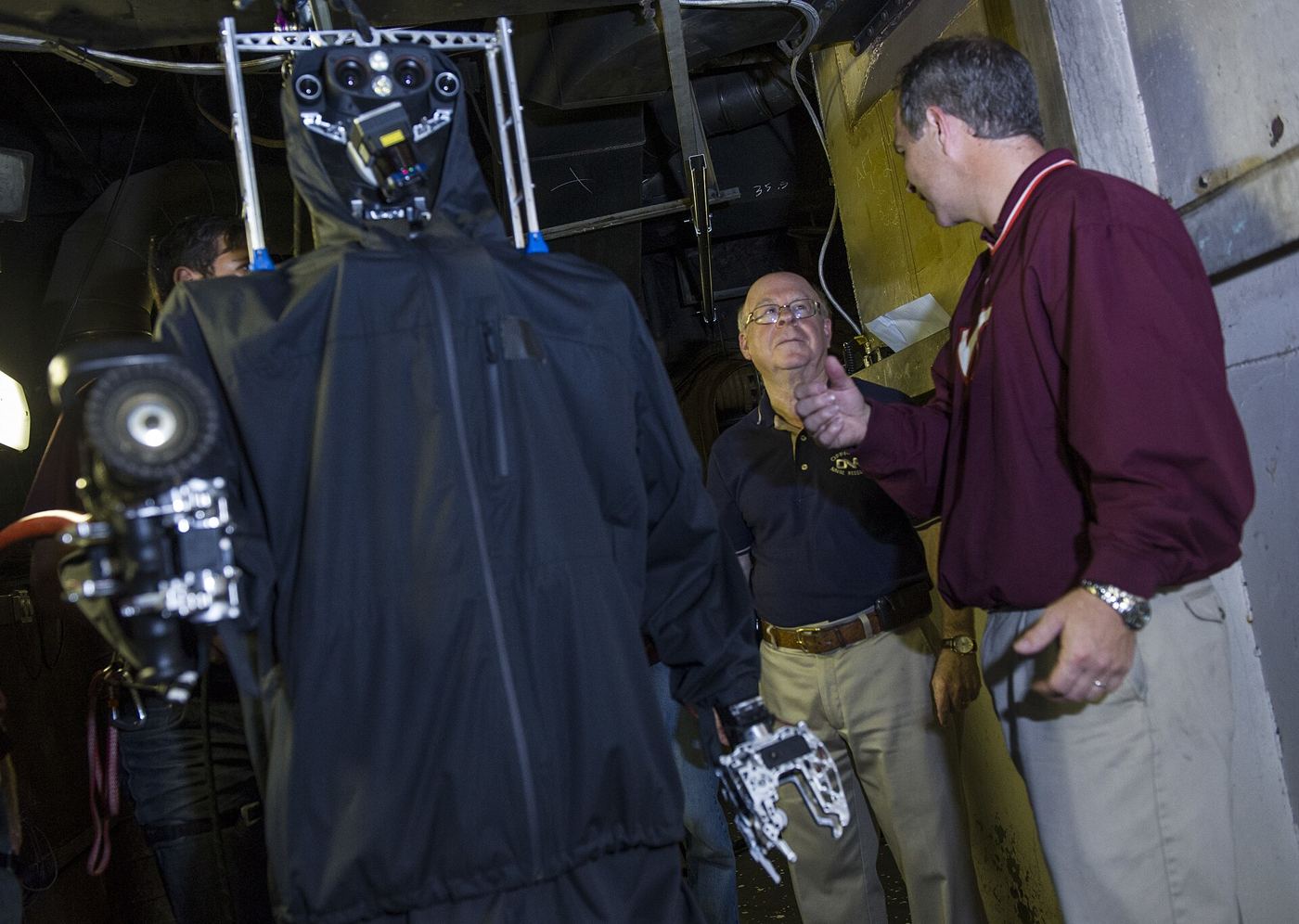
Hospitals run on small journeys: medicines, lab samples, meals and linen moving constantly between wards, pharmacies and laboratories, often carried by staff whose time is needed elsewhere. Robotics teams are now testing whether humanoid machines can take over some of those trips, and they are starting not on live wards but in laboratory mock-ups that reproduce hospital corridors, lifts and doorways. The humanoid form is chosen for a practical reason. Hospitals were built for people, with narrow passages, push-button doors and lift panels at human height, so a machine with arms and a roughly human footprint can, in principle, work in the space without rebuilding it. Trials focus on unglamorous reliability: opening doors without trapping fingers, waiting politely for a lift, pausing for a passing bed, and arriving with the right sealed box. Sensors and cameras must cope with shiny floors, glass and crowds that change by the minute. Developers stress that these are supervised experiments designed to find failure modes safely, because a hospital tolerates no casual errors. Each logged stumble, from a misread sign to a blocked route, becomes an engineering task before any patient-facing deployment is considered.
What the Evidence Shows
Whether hospitals actually need humanoid robots, rather than simpler wheeled couriers already in use in some facilities, is a live debate the trials are meant to inform. Wheeled boxes can carry supplies along set routes cheaply, but they cannot press lift buttons unaided, handle steps or load their own shelves. Humanoids promise flexibility at far higher cost and complexity, so health technology assessors want evidence about reliability, cleaning, battery life and staff acceptance, not just demonstration videos. Infection control adds requirements unfamiliar to factory robotics, since surfaces must withstand frequent disinfection and machines must never obstruct emergency movement. There are workforce questions too, and trial teams increasingly involve porters and nurses in design, positioning the machines as relief for repetitive carrying rather than replacements for care. If the evidence supports it, early real deployments will likely be narrow and supervised: night-time lab runs, for example, on quiet corridors. The laboratory stage, slow as it may seem, is where that case will be won or lost, one reliably completed delivery at a time. Reporting and analysis from sources such as IEEE Spectrum track the same developments, and specialists following humanoid robots hospital delivery trials say the direction is now consistent across independent lines of evidence.
The Wider Context
Adoption of humanoid robots hospital delivery trials follows a familiar pattern with an unfamiliar speed. Early users tolerate rough edges in exchange for advantage, mainstream users arrive when the tool disappears into existing workflows, and the market consolidates around whoever made that transition feel effortless. Vendors are racing less on raw performance now than on integration, support and trust.
What Happens Next
The realistic forecast for humanoid robots hospital delivery trials is steady integration rather than sudden replacement: embedded in products people already use, improving in increments, and regulated in proportion to its reach. The companies and institutions that plan on that basis, training staff and redesigning processes instead of chasing launches, are the ones the adoption data tends to vindicate. You can follow related developments in our coverage of technology.
It is also worth remembering how quickly the picture in this area has changed before. Positions that looked settled a few years ago have been revised as new data arrived, and the same humility is appropriate now. The strongest coverage of this subject, and the most useful advice, tends to come from sources that update their views openly when the facts move, rather than defending an earlier position long after it has stopped fitting the evidence available.
