

You want vehicles to keep moving and the barrier to open in time, without cards or an intercom. That mainly works if you look beyond just “the recognition.” In the lane, three things have to be right: the camera delivers a readable license plate image, the system makes a decision in time, and your authorization list is applied correctly. If you keep that foundation tight, traffic flow stays calm and you avoid unnecessary stops.
At Nedap Identification ANPR system we therefore often start by looking at your lane, your process, and your integration. Not as an extra step, but because in practice that’s where you prevent most faults and frustration.
Where it goes wrong: what the camera actually sees
The system is only as good as the image the camera receives. The live view at the moment a car approaches quickly tells you whether the input is “good enough.” Two signals that are almost always reliable: the license plate is fully in frame, and the characters are sharp enough to read with the naked eye. If that’s true, recognition becomes stable right away.
Light, reflection, and speed
Recognition only becomes truly reliable when the camera also delivers usable images in real on-site lighting conditions (sun, shade, wet pavement), including at the speeds you see every day. You’ll notice software performs better as soon as the image isn’t “blown out” and characters don’t fill in: the area with the characters needs to retain detail.
Angle, height, and framing
You get the most consistent recognition when the camera sees the license plate straight-on and large enough in the image. With good mounting and the right framing, you prevent distortion and keep the plate consistently fully in view, even if someone approaches slightly to the left or right.
Process issues: the list is wrong, so “ANPR fails”
Many reports that sound like “it doesn’t recognize my plate” are in practice not a recognition problem, but an authorization problem. The camera can read the plate just fine, but the barrier only opens if the authorization list also allows that plate. If you separate recognition from authorization, you’ll see faster where it’s really going wrong.
Whitelists and exceptions need ownership
It stays smooth when management of the whitelist and exceptions is set up tightly. Then you automatically admit the right vehicles every day, without constant manual work. Think of visitors, leased cars that change, or temporary vehicles such as pool cars or a trailer with a different plate.
Handling uncertainty: stricter or more tolerant
You can match more strictly or more tolerantly, and that determines how strict access is. Stricter gives more control; more tolerant often gives smoother flow. It works best when this fits your goal.
Integration: the chain is only as strong as its weakest link
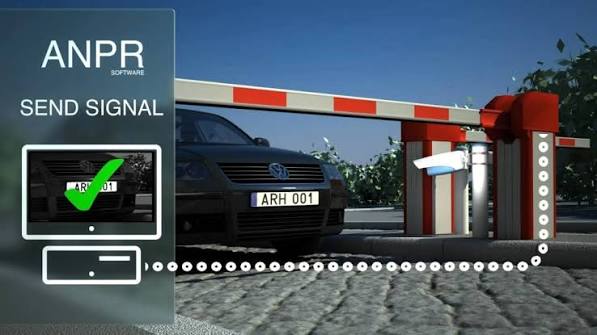
ANPR feels like one whole, but it’s a chain: camera, network, recognition, authorization decision, barrier control, and event logging. If you look at that chain step by step, you’ll see where delay or hiccups occur—and the lane stays calm because the system responds predictably.
Latency and behavior during outages
A good experience happens when recognition comes in before the car reaches the point where the barrier has to decide. Test this with real vehicles: when does recognition come in relative to the car’s position?
Management agreements you set in advance
You make it easier for yourself if two things are concrete upfront: where recognition runs (cloud or on-prem) and how long events and images are retained. In day-to-day use, cloud depends more on your connection; on-prem usually requires more in-house management, such as updates and monitoring. Longer retention makes searching back easier, but also means more management work and more questions around privacy and access.
If this is clear—who may view events and images, where that happens, and how long which data is retained—then you can act calmly and consistently when a question or complaint comes in.
